




April 1st passes, and the jokes fade away, but the scams don't take a break.
While April Fools pranks end, cybercriminals ramp up their attacks during springtime. This season is a hotspot for hackers, not due to carelessness, but because busy teams often miss the subtle threats hidden in everyday tasks.
Here are three active scams targeting alert, well-intentioned employees just trying to navigate their workday.
As you review these, consider: Does every member of my team truly stop to recognize these signs?
Scam #1: Fraudulent Toll Road or Parking Fee Alerts
Imagine an employee receives a text saying:
"You owe $6.99 for unpaid tolls. Pay within 12 hours to avoid extra fees."
These messages mimic real toll systems like E-ZPass or FasTrak, with small dollar amounts that don't raise immediate suspicion. In the rush between meetings, it's easy to click and pay.
But the link is fake.
The FBI logged over 60,000 complaints about toll scam texts in 2024, with a staggering 900% surge in 2025. Scammers have launched tens of thousands of fake domains impersonating official toll agencies—even in states without tolls.
The trick is simple: a minor amount and a familiar context make the scam feel genuine.
Protection comes from a strict rule: no toll payments are ever requested via text. Employees must verify through official websites or apps directly and never respond to suspicious messages—not even with "STOP," which confirms an active number.
Convenience lures victims; strict procedures shield them.
Scam #2: Fake 'Your File Is Ready' Notifications
This scam fits seamlessly into daily workflows.
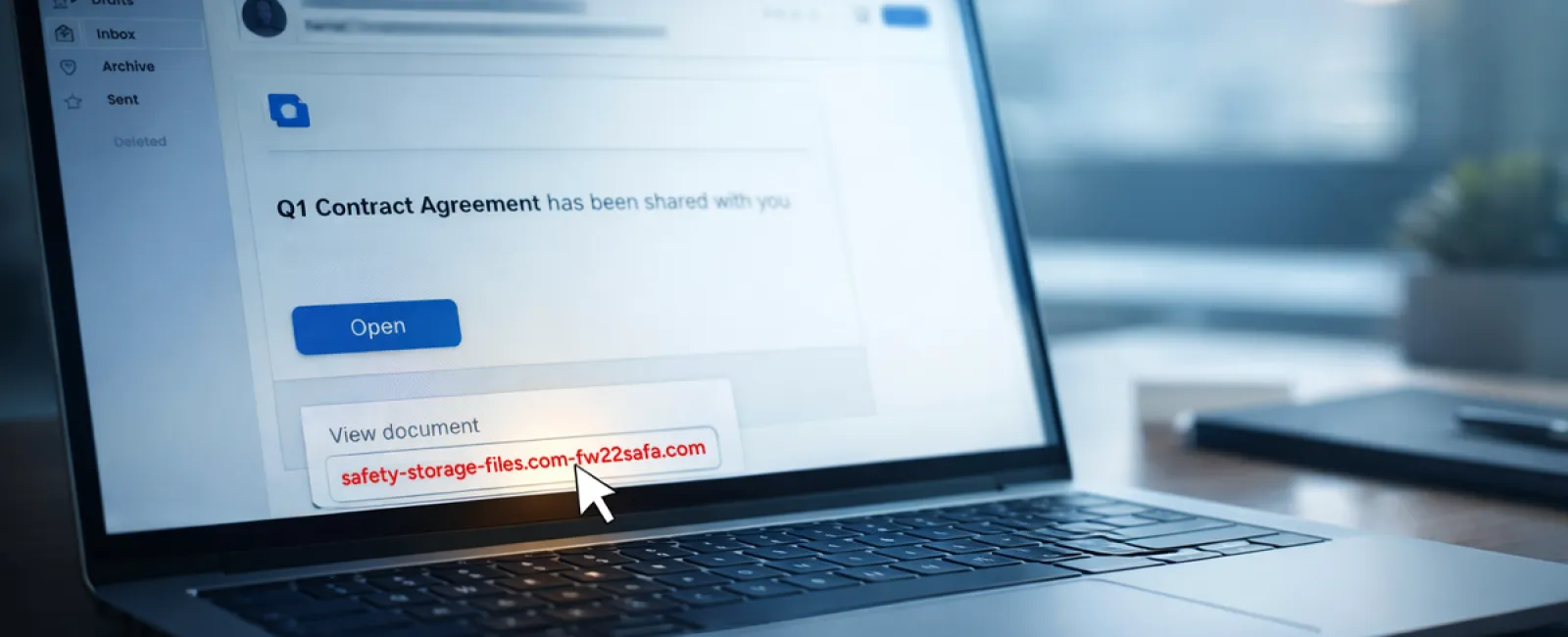
An employee receives an email about a shared document, such as a contract via DocuSign, a spreadsheet on OneDrive, or a Google Drive file.
The sender appears legitimate, the email format flawless.
After clicking, they're prompted to log in—but entering credentials hands hackers access to the company's cloud systems.
This attack has soared dramatically—phishing on trusted platforms like Google Drive and Microsoft increased by 67% in 2025, with Google Slides phishing jumping over 200% in six months.
Employees trust these notifications, making them seven times more likely to click than random phishing emails.
Some attackers even exploit compromised accounts to send notifications from legitimate servers, bypassing spam filters.
Effective defenses: Train staff not to click unexpected links. Instead, have them log in to the platform independently to verify files.
Restrict external sharing permissions and enable alerts for suspicious logins—configurations your IT team can set up quickly.
Simple daily habits protect critical assets.
Scam #3: Highly Polished Phishing Emails
Gone are the days when phishing messages were easily spotted by poor grammar or odd formatting.
A 2025 study revealed AI-generated phishing emails achieve a 54% click rate—over four times higher than human-written scams.
These sophisticated emails reference real companies, job titles, and workflows, pulled instantly from public sources.
They're carefully tailored: HR sees fake employee verification requests, finance gets convincing vendor payment change emails.
In one test, 72% engaged with vendor impersonation emails—a rate 90% higher than other phishing types.
The messages are calm, professional, urgent, and blend perfectly with regular inbox traffic.
Guardrails to implement: Verify any sensitive request through a separate channel—a call, chat, or in person.
Hover over email addresses before clicking links to confirm authentic domains.
And always treat emails pressuring urgency as a red flag.
True security relies on caution, not fear.
Why This Matters Most
These scams thrive on trust, urgency, and the belief that "it'll just take a moment."
The risk isn't careless employees; it's assuming everyone will pause and double-check under pressure.
When a single rushed click can disrupt your business, the problem lies in flawed processes—not your people.
Thankfully, these process gaps can be fixed.
How We Can Support You
Business owners don't want another overwhelming project or the burden of constant cyber-education.
They want confidence that their company isn't silently vulnerable.
If you or a fellow owner worries about your team's exposure, let's talk.
Book a straightforward discovery call to discuss:
- The current cyber risks businesses like yours face
- How vulnerabilities sneak in during routine work
- Practical strategies to reduce risk without slowing your team down
No pressure, no scare tactics—just clear conversation about addressing your concerns.
Click here or give us a call at 720-449-3379 to schedule your free 15-Minute Discovery Call.
If this doesn't apply to you, please share it with someone who could benefit from this vital insight. Sometimes awareness turns a "would have clicked" into a "nice try."


